Monday, April 22, 2013

A Subtle Horror

Megan SylviaMad Men is a horror series.  There… I said it.  I didn't believe this until recently.  My impression was that it was a dark and brooding drama about the desperate and horny realities of life.  This was until I had a conversation with a woman who could not watch the show.  “Not watch Mad Men?” I thought… “How could you not watch Mad Men?”  “You don’t understand,” she said… “Watching Mad Men to me is like watching horror movies to you.”

That registered with me because I am a notoriously scaredy-cat horror movie-viewer.  I fidget, cover my eyes like a kid, and furiously fast-forward through the scary parts so I can rewind and watch them, knowing what will happen.  The horrors to her are the lies and betrayal… the possibility that the man she married and trusts is, in reality, a different man altogether.  An avatar for the worst nightmare of one who wants to love and be loved.  It was with new eyes that I began to see many women unable to watch the show.

In Episode 3 (Collaborators) of Season 6 (Spoiler alert!), we find that Don Draper is sleeping with the wife (Sylvia) of the closest friend we have seen him have to date.  This is after believing that he amended his ways in Season 5.  Don’s new wife, Megan, is a terrific, smart, supportive, and beautiful lady.  We find out that she miscarries and, ignorant of the affair, vouchsafes this to Sylvia, who she sees as a friend.  She tells Sylvia she feels “shitty” about the miscarriage and not telling Don about it.  This, in turn, makes Sylvia feel guilty about the affair.
nightmare elm streetIn a following scene, we see Don and Sylvia having dinner together.  It was supposed to be a couples’ dinner with both of the spouses but Megan is feeling ill and Sylvia’s husband, a doctor, is called away.  The stage is set here for one of the most frightening exchanges of the series.  Sensing Sylvia’s guilt, Don says to her in a sadistic and misogynistic way, “Now I understand. You want to feel shitty right up until the point where I take your dress off.”  Don shows us a rare glimpse of the horror character.  Flashing eyes, violent and degrading words… a cruel and black heart driven by domination.  The word “shitty” cues us in here to a contrast between abject vulnerability and cruel betrayal.

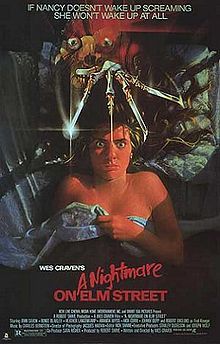
All of this is buttressed by scenes from Don’s adolescence in which he lived for some time in a house of prostitution.  The seedy and unfaithful people… the backroom trysts… the fruits of the rejection of love.  In one instance, Don is seen looking at a tryst through a keyhole.  A voyeurism that creates and is indicative of a desire to dominate.  My mind is immediately taken back to the circumstances of Freddy Krueger's birth in Nightmare on Elm Street.  A ghastly, tragic, and formative foundation for a terrifying character… as I believe we are seeing here.

A while ago, I wrote (here, here, and here) of Freud’s understanding of the uncanny and how zombie horror can reflect it.  Right under my nose was an even better reflection on the tragedy of human sin as expressed in the uncanny.  The subtle horror of Don Draper… the thing that really keeps us up at night.

Thursday, April 19, 2012

Coal: The Power of the Good Father


In the (by now quite famous in our circles) series of talks given at The Cathedral of the Advent by Professor Rod Rosenbladt on the subject of fatherhood, one of the first insights presented was that of Helmut Thielicke’s The Waiting Father. In this, his work on Jesus's parables, Thielicke artfully and tragically describes modern man’s belief that he is quite alone in a dark universe ambivalent to his existence:
"Man is walking through the dark forest of life in the gloom of night. Specters are lurking all around him and strange sounds disquiet him. The dark forest is full of dangers. Modern man calls this weird sense of threat and danger the anxiety of life, the fear of life itself. He would give a lot if there were someone to go along with him, someone who would put his hand on his shoulder and say to him, "Don't worry, I am with you. I know the pitfalls, I know the dangerous cliffs, I know where the robbers lie in ambush, I'll get you safely through. As long as I am with you nothing can hurt you." He would give a lot if this were so. But now man knows—or thinks he knows—that this someone does not exist at all and that he actually is alone in the dark forest of his life. So he begins to talk aloud to himself, as children do when they have to go down the dark cellar stairs alone, comforting themselves with the sound of their own voices. But there is nobody there, and he is dreadfully alone."
There are very few antitheses to this in current popular culture more powerful than the father/son dynamic of Andy Christian, Sr. and Andy Christian, Jr. in the Spike TV series Coal (for background, see my first post on the series). It is an almost word-for-word answer to Thielicke’s lament. The only difference in the analogy is that Coal is set in dark, dangerous mine rather than a forest.

It is mentioned during the show that Andy, Sr. and Andy, Jr. have been driving to work together ever since Andy, Jr. was old enough to work. The viewer can actually see how apprenticeship to a loving father might have actually looked all those generations ago when such a thing was more common. It is obvious that Andy, Jr. reciprocates his father’s love and he wants desperately to be like him.  Andy, Sr. literally goes down into the dark and dangerous mines with his son and shows him all the pitfalls and dangers. He teaches his son, Andy, Jr., all of the tricks of the trade and how to thrive in what seems to be a most inhospitable place. The great wealth of knowledge passed from the father to the son is clearly done in love rather than duty.

Thielicke concludes his thoughts about the perfect Heavenly Father… the One to whom all good analogies like Andy, Sr. point:
"It is no longer the fog-shrouded landscape where I anxiously keep watch because somewhere out there dark dangers are brewing against me. No, everything is entirely different. We do not know what is coming, but we know who is coming. The final hour belongs to us. We need have no fear of the next minute."

Thursday, April 12, 2012

Coal: The Power of Imputation


A couple of weeks ago, the Wizard of Netflix recommended the Spike TV (home of all things faux-masculine) reality series Coal.  It seemed riveting because it followed two shifts of coal miners down where it is “dark as a dungeon” (Merle Travis)… and it was.  I was unprepared, however, for the explosion of Gospel insight.  For this reason, I drank deeply from the series, finishing the first season (and only… so far) in three days.

A bit of background:  Cobalt Coal Company (the focus of the show) is a small coal company that operates in Westchester, West Virginia which is home to a high-grade coal seam.  As small as they are, they have the usual cash flow problems.  Cobalt works two shifts of crews so they can mine 24 hours a day.

There are two insights that jump out at me and I would like to share them with you in as many parts.  The first is that of imputed righteousness.  Here’s how it goes:

The day shift includes a father/son team.  Their names are Andy Christian, Sr. and Andy Christian, Jr.  Andy, Sr. is known as “The Legend” and is heralded to be the best miner operator in West Virginia.  This means he is one responsible for finding the coal seam and directing the mechanized miner to it in the most efficient and effective manner.  It seems he is born for the job.  As cash flow problems manifest and production is needed in the mine to cover them, Andy, Sr. comes through and saves the mine from bankruptcy time and time again.

His son, Andy, Jr., is the miner helper.  He gets paid to help his dad.  Andy the Younger seems to be in his early twenties and displays some of the characteristics of that age.  While clearly close to his father (the subject of the next post), he exhibits some youthful hot-headedness (although, on the whole, he is a fine worker… more on this later, too).  He even exhibits some open contempt for his bosses when he is temporarily taken away from his father and assigned another duty.

The tension is high in this episode but there is no way he would be fired.  Why?  Because his father is holding the place together.  Without Andy, Sr., Cobalt Coal would be a distant memory.  The company hired the son when it hired the father and they are inseparable.  So, in a way, Andy, Jr. is simul iustus et peccator, simultaneously hot-headed and safe.

If this were not perfect enough (in a culturally theological way), there is another worker about the same age as Andy, Jr.  He doesn’t have a father there and he also displays youthful hot-headedness and contempt.  He gets fired in dramatic fashion.  One young man has been objectively justified and one has not.  One young man's family name (Christian!) is his salvation and the other can claim no such justification.  So powerful!

In our next installment, we will look deeper into the father/son relationship of Andy, Sr. and Andy, Jr. and see if there might be some powerful Rod Rosenbladt-ian father/son insight.

Good Friday

Rite I: The Patti Smith Story

Where do the 1970s New York punk scene and liturgical nattering converge? Why, in the person of Patti Smith, of course. She is the most recognizable female punk rocker of the era and this is disputed by very few people. The only one who comes close is Bromley Contingent matriarch Siouxie Sioux.

A little-known fact is that Patti Smith was raised in a serious Jehovah’s Witness family. This is reflected consistently in her music as she continually challenges God, addressing Him as if He exists. One cannot help but identify with and admire her public conflicted-ness and questioning.  In a very famous incident, she began twirling around frenetically during a show and challenged God to stop her. She immediately fell off the stage and broke a bone. Coincidence, legend or superstition? Could be. I’ll let the historians take that one.

We do have her lyrics, for sure. The most famous of her God-challenging comes at the beginning of her re-make of Van Morrison’s “Gloria” where she sings: "Jesus died for somebody's sins / But not mine." Now, this is fascinating to me. I believe a couple of things are at work here (and please pardon me while I presume to psychologize… I am fully aware that I am speaking of a living, breathing person whose complexities I could not possibly know… the following is just my take for what it’s worth).

Smith colluded often with Richard Hell, mostly with respect to poetry. As you may (or probably don’t) remember, I wrote a little piece about Hell’s song “Blank Generation”. In the song, he posits that we are all free agents and totally capable of creating our own identities. My suspicion is that Patti Smith is assenting to this by saying, "Jesus died for somebody's sins / But not mine." 

Somewhere, though, in her Christ-haunted primal recesses, there is a great conflict. Another voice is telling her she is not free. In fact, she is quite bound and needs help. A substitute and a great well of never-ending grace and mercy. And she’s not quite sure it is there for her.

This leads me to an interesting (only if you are totally weird) discussion I had with a ministry friend a few years ago. We were discussing the (Episcopal/Anglican) Rite I Liturgy of the Table, i.e. the more traditional service of Holy Communion. After the Preface, it is said:
“All glory be to thee, Almighty God, our heavenly Father, for that thou, of thy tender mercy, didst give thine only Son Jesus Christ to suffer death upon the cross for our redemption; who made there, by his one oblation of himself once offered, a full, perfect, and sufficient sacrifice, oblation, and satisfaction, for the sins of the whole world…”
My friend said the portion in the bolded type is didactic and repetitive. I disagree with him. I believe is it poignantly pastoral. No one believes grace, mercy, and love are for us. Especially in the times we assault our consciences with all kinds of terrors. We are so deeply suspicious of an unconditional word of promise from outside that we will take any route possible leading to self-expiation. Far from didactic or repetitive, the words of promise described above insistently and lovingly assault our own assault on our consciences.

So the next time you are in a Rite I service and hear these words, connect with the Patti Smith that lives inside of you (and everyone) and be comforted.

Saturday, September 24, 2011

"You Will Be Like God..." The Richard Hell Story

In my all-too-obvious attempt to understand my childhood, I have undertaken a study of exactly what happened in the ‘80s, musically. In order to do that, one must understand the prerequisites. In this particular case, the prerequisites involve what happened at a club called CBGB which is located in the Bowery in Manhattan. It was the locus of the American underground rock ‘n roll scene in the mid-to-late 1970s. Cutting their teeth at CBGB at that time were such icons as The Ramones, Talking Heads, Television, Blondie, and Patti Smith.

There are many parts of that era that would interest a Mockingbird-oriented person and one of them is the career of a guy named Richard Hell. Hell was a fairly well-read fellow (and from an upper-middle class family as, ironically, many “punks” were). He was a forceful and uncompromising visionary who floated, unsatisfied, from Television to The Heartbreakers (no, not THOSE Heartbreakers) and, finally, to his band Richard Hell and the Voidoids.

One of his earliest songs is his most misunderstood. It is also his most interesting. It is called “Blank Generation” and it is mistakenly taken as an anthem for an uncaring and apathetic group of rock ‘n roll punks like “Pretty Vacant” by The Sex Pistols. Hell describes it differently, however:
“ That is the ultimate message of the New Wave: if you just amass the courage that is necessary, you can completely invent yourself. You can be your own hero, and once everybody is their own hero, then everybody is gonna be able to communicate with each other on a real basis rather than a hand-me-down set of societal standards."


Ugh. (Good tune, though) Blank Generation = Blank Slate or Blank Canvass. Here again, we have an advocacy of self-creation. Just another example in another place. By virtue of the right choices and considerable inner strength, the objective reason of the mind can create the self in any form it wishes. Ah, the glories of free agency. Always ever-present.

It does raise a couple of questions: Why was Hell consistently unable to get his vision across to the other free agents of his revolving door of bands? (To be fair, the Voidoids did for a time.) More importantly, why did Hell feel the need to obscenely self-medicate with some of the heaviest drugs around? (Listen to “Chinese Rocks”!) There seems to always be massive disconnect between the philosophy of free will/agency/identity-creation and a nagging, vociferous reality. We must sound like a broken record about this, but history dictates that it bears a fairly regular hearing.

Perhaps the best assault of reality into this mode of thinking came in Manchester, England during the same time period. Ian Curtis of Joy Division was at the pinnacle of what would soon prove to be the steep cliff of suicide. Nihilistic self-creation was the order of the day, ironically, in a declining United Kingdom with very little opportunity to advance oneself. It was in this atmosphere that Curtis wrote “Isolation”, the other side of the coin to free agency. It was shortly after this song was released that he hanged himself. Rather than liberation, self-creation and free agency lead to an impossible burden and deep defeat.


With this burden of free agency, it isn’t very satisfying to cast your faith on something else (we would argue for the Resurrected Lord) that isn’t true. But that is a different scope for a different piece. For now, we can stand with one half of Richard Hell (his unconscious, perhaps), Ian Curtis, and a host of others who find themselves crushed by the false idea of free agency.

Monday, September 5, 2011

Wednesday, August 10, 2011

The Velvet Underground Goes to California

From 1966 to 1969, a non sequitor invaded California which was, at that point, ground zero for the hippie movement. Being the locus of this particular subculture, the vibe of peace, love, and the one-ness of human existence was in the air as if it were a new idea. Since it was believed to be a new idea; other, more ancient insights into human capacity for love were not taken into account. This made the round hole especially apoplectic that such a square peg would force itself on it.

This non sequitor that invaded this place and state of mind was none other than the New York avant garde rock group The Velvet Underground. Already, the group had recorded an unheard-of song about matter-of-fact addiction called "Heroin" in which the protagonist both rationalizes his addiction and admits that death awaits him.  This was more than ten years before J.J. Cale would write his famous song "Cocaine".  "Venus in Furs" further assaulted the senses with its unflinching depiction of masochism. The Velvet Underground did not receive a happy hearing in California.


From From the Velvets to the Voidoids: A Pre-Punk History for a Post-Punk World:
Rather than indulging in the contemporary fascination with hallucinogenics, the Velvets were an amphetamine band – in every sense – loud, cynical, brutal and frenetic.  They were not interested in mellowing out an audience. (p. 22)

[Velvet guitarist] Sterling Morrison: When we finally made it to San Francisco we were attacked directly. They convinced themselves that we were there to destroy the innocence and purity of their music.  Ralph Gleason said that we were the urban evil of New York, and we were there to corrupt the simple beauty of the California music. (p. 23)
It is easy to say that hippie optimism about the human condition, just like contemporary Evangelical and secular optimism, is related to the optimism of the Enlightenment and Great Awakenings. That would be true. But it has always been so. It has been the default human position from the very beginning. No one wants to hear an accurate diagnosis. Even if it is true. Especially if it is true.
So, ministers of the Reformation continue diagnosing to plugged ears. People continue pretending like they didn’t hear the question and reacting angrily. At least until the wheels come off. Charles Manson and Altamont ’69 notwithstanding.

It is said that a minister can empty out a cocktail party with talk of original sin, total depravity, the bondage of the will and other pessimistic insights into human potential.  So, when it happens, just know that it has happened before; when the Velvet Underground emptied out Haight-Ashbury.

Sunday, July 17, 2011

The Whole Duty of Man, Part III

"And in the same region there were shepherds out in the field, keeping watch over their flock by night. And an angel of the Lord appeared to them, and the glory of the Lord shone around them, and they were filled with fear. And the angel said to them, “Fear not, for behold, I bring you good news of great joy that will be for all the people. For unto you is born this day in the city of David a Savior, who is Christ the Lord. And this will be a sign for you: you will find a baby wrapped in swaddling clothes and lying in a manger.” (Luke 2:8-12)

I was at a Christmas party this past weekend and found myself in a conversation with a delightful Christian fellow who is working towards a PhD in Philosophy. His chosen subject is the philosophy of beauty and aesthetics. Now, I don't pretend to know anything about that, but the idea certainly sent my mind racing.

For me, beauty conjures up majestic images of mountain ranges, great oceans, forests, and natural wonders. Theologians sometimes use these as proofs for a loving God. Maybe that works for some but, to me, they are monuments to natural indifference (at best) or places hostile to life (at worst). I should know since I've been lost on a mountain in Montana and caught in a riptide in the Gulf of Mexico.

Upon further reflection, I affirm the insight that beauty lies in the thwarting of man's compulsion to assert and define himself (original sin and bondage). Or, more specifically, the cessation of man’s striving. That, and the creation of faith. And, more often than not, this thwarting and creation is ugly to human eyes. When eyes are taken off technically correct dogmas and formulae and set upon the ugliness of the creation of faith, there is nothing

left to do but mourn.

“Blessed are those who mourn, for they shall be comforted.” Matthew 5:4

This is the difference between a wild-eyed and desperate acquiescence or liberation that comes from death and the interruption in human history that we believed happened two thousand years ago. And we actually believe (as mentioned in Luke 2 above) that This Child arrived in a place and manner that was below human achievement and glory. The glory of God was manifested in a troublesome backwater that had no value in the progressive march to Man’s triumph.

And if this recession, an addiction, or anything else has destroyed what you and everyone else perceives as value; and you find yourself faced with either the Albert Camus/desperate freedom of death or the Luke 2 version, hear these words from Martin Luther:

"If Christ had arrived with trumpets and lain in a cradle of gold, his birth would have been a splendid affair. But it would not be a comfort to me. He was rather to lie in the lap of a poor maiden and be thought of little significance in the eyes of the world. Now I can come to him."

Wednesday, July 6, 2011

The Whole Duty of Man, Part II

“…his only reasonable transaction in that commodity would have been to buy it for as little as he could possibly give, and sell it for as much as he could possibly get; it having been clearly ascertained by philosophers that in this is comprised the whole duty of man — not a part of man's duty, but the whole.”
- Charles Dickens from Hard Times

My last post and this one were inspired by the powerful words of Dickens above. Just a lonely portion of a paragraph in a book that no one thinks is his best. And it is a sledgehammer of a thought. Pure death. And death is exactly what I want to talk about in light of this Christmas season.

We left off discussing our uncontrollable need to present ourselves as valuable. When our output is either deemed as worthless or trumped by another's output, so goes our identity. The very definition of who we are dies. It is the inner drive of "justification by works" that most theologians tend to gloss over as they pant after ethics.

Death, it must be said, is quite the liberator. "What would you do if you were to die tomorrow?", is the common question. The implication is that the doer would be free of all constraints. All of a sudden, things get complex. After being condemned for murder and coming to terms with it, the protagonist of The Stranger thinks:

"With death so near, Mother must have felt like someone on the brink of freedom, ready to start life all over again. No one, no one in the world had any right to weep for her. And I, too, felt ready to start life all over again. It was as if that great rush of anger had washed me clean, emptied me of hope, and, gazing up at the dark sky spangled with its signs and stars, for the first time, the first, I laid my heart open to the benign indifference of the universe."
- Albert Camus from The Stranger

Tragic words. Death (either the physical, final sense or society's pronouncement of obsolescence) can liberate in many ways. It can be anywhere from going to see Mother for the last time to entering into the narrative of Bruce Springsteen's Nebraska. It's the great void or the "vanity of vanities". "Freedom is just another word for nothing left to lose," says Kris Kristofferson.

And this brings us to Christmas. Despite what you see outside and on the television, this holiday brings a profoundly grown-up message. But, since I don't want to short-circuit the insight of Dickens and Camus, it will have to wait for another post.

Wednesday, June 29, 2011

The Whole Duty of Man, Part I

“…his only reasonable transaction in that commodity would have been to buy it for as little as he could possibly give, and sell it for as much as he could possibly get; it having been clearly ascertained by philosophers that in this is comprised the whole duty of man — not a part of man's duty, but the whole.”
- Charles Dickens from Hard Times

As one who is sort of willingly/unwillingly lingering in the business arena, the recession and access to capital has been on my mind recently. The other day, a thought struck me as I wondered how my fellow man was coping. I did a Google search for "suicide in the recession" and found this article which was quite eye-opening. The following telling paragraph preceded some tips on how to stave off depression:

“In our world, we have come to a place where things like wealth and status become things that are intertwined with the self too much," says Steven Craig, a therapist in Birmingham, Mich. "When you have that loss of identity, and the shame and hopelessness they feel, the blow to themselves is so severe they don't feel like they can recover."

As we have discussed earlier, there is a all-encompassing compulsion to value ourselves based on the quality and quantity of our output. Craig says, "...we have come to a place..." but that is simply untrue. We have always been in this place. Our value is directly correlated to what we produce (we believe). This idea has provoked some insightful artistic backlash (such as Kafka) but this complaint of alienation and de-humanization has largely gone unheard.

Those in Christian theological circles who believe that justification is a secondary issue are simply not paying attention. "Justification by works" is not some bugaboo that a half-crazed 16th Century German monk imputed onto the human condition. Human society from its conception has been empirical proof that man seeks to justify himself by his output. Civilization is a colossal "will to power" (to borrow a philosophical term) and where there is failure there is abject poverty of personal value. To quote Jimmy Cox, "Nobody Knows You When You're Down and Out".

And this leads to all of these things described in the Newsweek article: substance abuse and other forms of self-medication, isolation, and suicide. But this is the limit of an Ayn Rand who trumpets this system and a Franz Kafka who bemoans it. What is on the other side of one whose value has been perceived as forfeit? For Rand, it is irrelevance and for Kafka, it is death. And I say they are one in the same.


Wednesday, June 22, 2011

Living Bread not Living Dead


Romans 5:6-8 For while we were still weak, at the right time Christ died for the ungodly. For one will scarcely die for a righteous person—though perhaps for a good person one would dare even to die— but God shows his love for us in that while we were still sinners, Christ died for us.

One of the great moments of the television show The Walking Dead comes in Episode Two when a bunch of survivors are trapped in a building by what seems to be the entire zombie population of post-zompocalyptic Atlanta, GA. The zombies know they are in the building and it is just a matter of time before numbers and brute force overcome the locked doors and meager defenses.

Our hero, Deputy Sheriff Rick Grimes, figures out that the zombies distinguish zombie from delicious non-zombie (plausibility awaits another day to make her debut) by their sense of smell. An escape vehicle is spotted a couple of blocks away but the zombie horde is between it and the survivors. How, then, is one to survive for the rest of Season 1 and make a go at Season 2? Easy. Chop up a zombie that has already been dispatched, smear the grime all over yourself, pretend like you are a zombie, and walk through the zombie foot traffic to the escape vehicle. And you thought your day was stressful.

The serious and genuinely moving part comes here. After procuring said dispatched zombie, Grimes is about to begin the “operation” and stops himself. He looks over the corpse and takes the zombie’s wallet out of its back pocket. “Wayne Dunlap… Georgia license… born 1979.  He had 28 dollars in his pocket when he died… and a picture of a pretty girl… ‘With love, Rachel.’  He used to be like us… worried about bills, or the rain, or the Superbowl… If I ever find my family, I’m going to tell them about Wayne.”

There is something profoundly Christian and humane about this scene. It is very different from the nihilistic Woody Harrelson-like approach of other zombie shows and movies that bludgeon without reflection on what might be the story of the bludgeoned. Grimes, in a more self-aware fashion, recognizes its inability to do anything contrary to the condition in which it finds itself.   He has compassion and gives Wayne Dunlap the eulogy he never had. All to a zombie that posed risk to life and limb a few hours earlier.

This is quite a good analogy for God’s “justification of the ungodly” (Rom. 4:5) in that it helps us understand God’s understanding of us. In my last post, we see that our wills are bound and not free. They are bound to tilt at God in an effort to establish our own deity and mastery over our domain. This works itself out in relational dysfunction and self-defeat as layered and complex as human psychology itself. You know it is true because this is what wakes you up at 3 o’clock in the morning.

But God does not wait for the embedded kinks and taint to be kicked out before loving the sinner and providing for her justification. God understands your bondage and self-destruction. And the love light is unfettered. This is an insight that does not need to delude itself or force compartmentalization. “… while we were still sinners, Christ died for us.” For all of us zombies.

Wednesday, June 8, 2011

Do You Have A Zombie Plan? Part VII

We move in this installment from the fear of others to the fear of what is actually in our own hearts.


Oprah had her last show the other day and, while I didn’t see it, my wife told me about it.  She said she had to turn the show off because Oprah’s insistence that the answer to life’s problems lie within the human heart (or the “strength within”) was too grating and untrue to life to bear.

If you are taking a journey within yourself to find your strength, then you had better keep your eyes straight ahead and try not to poke around too much.  Even if there is a movement in the corner of your eye, it is probably best not to turn your head and look.  You might even want to put on a diver’s apparatus like Cartman did as he strolled through San Francisco in search of Stan in the “Smug” episode of South Park.

We took a look at Romans 3:10-18 the other day and were shocked by how direly it describes the human condition.  We must now take the biggest leap of all and say it applies to us.  Not just them, or those over there, but the beating heart in your chest and the thing located between your ears.  It is a terrifying leap but one that is necessary to begin your life again.  Movies about the living dead will help you.

One of the most poignant moments in the television series The Walking Dead is when Andrea’s sister (who we have grown to know) is bitten by a zombie and is reanimated (comes back as a zombie for all the lay people).  She begins as a sympathetic person who you can identify with and ends up as one of the living dead with only havoc on her mind.

It becomes the uncanny in the sense that you can see uncontrollable impulses begin to manifest in your own life.  The obvious place to start is addiction.  You know you are an alcoholic and you know the devastation that will take place but the glass makes its way to your lips anyway.  Perhaps there is something that just paralyzes you at work and the gap between the expectation of the employer and the quality of the work done reveals a consistently self-destructive streak.  Or, as singer/songwriter Chris Knight sings; “I know the words that’ll bring you back/ but I don’t say nuthin’ as I watch you pack,” your capacity to sabotage love and relationships has left you alone for the foreseeable future.  Workaholism, perhaps?  Does “Cat's in the Cradle” by Harry Chapin hit you where it hurts?

The key here is not to go into denial and pretend a little training from a life coach is going to help.  It is not to look inside as Oprah advises (as well-intentioned as she is) because you are not going to find much that will help you.  It is to come into accordance with our Romans passage and be crucified with Christ.

In our next (and final…. until reanimated….) entry we will find out what the Christian message is toward those of us who find ourselves with no other choice but to agree with St. Paul.


Wednesday, June 1, 2011

The Who: Live in Houston, Texas 1975, Song Thirteen


The famous Pinball Wizard.  Seeing this performed in the film Tommy with Elton John is a real experience.  I imagine the original viewers saw it with pharmaceutical helps.